
A Sermon for the 18th Sunday after Pentecost / Mark 9:30-37
Who is the G.O.A.T.? Do any of you know what I am talking about? What would you say if someone just came up to you randomly on the street and asked you “Who is the G.O.A.T.?” I mean, it is easy around here, right? I am going to say Coach K? [will that get me in trouble here?] The term “G.O.A.T.” stands for “Greatest of All Time.” It originated in sports culture, becoming popular in the late 20th and early 21st centuries to refer to athletes who are considered the best in their field. The greatest. The fastest. The strongest. The youngest. The brightest – and all the other superlatives.
We can chat later about all the G.O.A.T.s we know in various fields or in the world of sports, but is should not be lost on any of us this morning that today’s passage from Mark’s Gospel lands us right into the middle of an argument between the disciples, only in this case, it is which of them was the GOAT!
We are still in a traveling narrative and Jesus and his disciples are journeying through Galilee and he still doesn’t want anyone to know it. Then he begins again to unpack who he is and what he came to do: “The Human One will be delivered into human hands. They will kill him. Three days after he is killed he will rise up.”[1] Ok. If you are like me, I have questions. Um, who is the Human One? Is that the same as the Messiah? Jesus, are you talking about yourself in the third person? What is happening? And whose human hands are you being delivered into? And what is this about killing? I don’t like talk about killing, and it seems a bit dark given this healing tour you have begun here in Galilee. Rising up? Does that mean there was no killing? Are we talking metaphorically here? Questions, questions, questions. Inquiring minds want to know!
Of course, Mark tells us that even if the disciples had some of all of these questions, they said nothing. Yes, you heard that right. They said nothing. “They didn’t understand this kind of talk, and they were afraid to ask him.” So they moved on. Literally and conversationally. They literally entered Capernaum, and in terms of the conversation, they began to talk about something they did have interest in discussing at length, at least among themselves. WHO AMONG US IS THE REAL GOAT?!
Now let me just make another observation here for a moment – this is truly hard to believe right? Can any of you imagine followers of Jesus in the first century or for that matter, followers of Jesus today in the 21st century, getting together and having ridiculous arguments about who is greater than the other? Wait, on second thought, don’t answer that question, I am afraid we might start having an argument here in worship. Arguments in church, in the public square, in the middle of a political election cycle, with regard to sport teams and athletes, about finances, different perspectives on current events, you name it. I can’t imagine a passage more relevant for today’s church.
Jesus comes to us trying to unpack just how challenging and difficult his mission will be given the current state of affairs in first century Palestine, and all of us would-be-followers of Jesus are busy trying to one-up the person next to us – who is the greatest? Who is the holiest? Who is the most faithful? Who is the most generous? Who is the most woke? Who is the most resistant to performative wokeness? Who is the most deserving? Who is the most correct? The most reliable? The most accurate interpreter of Scripture? The most … well, you fill in the blank. It is ridiculous. And sadly enough, it is us. This story describes the human condition perfectly, and if you will allow it today, it is a hard look in the mirror of our lives – how we live, how we relate, how we can become distracted, and how we can so easily major on the minors and miss the important stuff Jesus is trying to say and to do.
But here is the thing. I want you to notice what Jesus does next. Jesus steps right into the middle of all the things that we are focused on, arguing about, and spinning our wheels around and … well, he doesn’t take the bait. I love that. If there had been first century social media, Jesus would have frustrated all the keyboard warriors out there, because he doesn’t rant and rage or join in the fray of what everyone is lighting their hair on fire about. No. Instead, he flips the script, and he completely transforms the conversation altogether.
And before I tell you what he does, let me just remind you again what he doesn’t do! He doesn’t pull out a spread sheet, enter criteria for each GOAT submission, and then generate a comparison chart. He doesn’t quote one Bible verse to combat another. He doesn’t get mired in the same circular arguments that keeps his followers spinning up in anger or spiraling down in despair in all the unhelpful and even self-destructive ways we succumb to so easily. NO. He reaches for a little child, placed him among the Twelve, and embraced him.
I love that. And before I go further, I want you to notice something I have missed in previous reflections on this passage. Jesus didn’t just grab a child to use a child as an illustrative point, he reaches for a child and he enagkalizomai (love the CEB translation here – he embraces the child; he takes the child up in his arms). I believe that part is significant. Then Jesus says: “Whoever welcomes one of these children in my name welcomes me; and whoever welcomes me isn’t actually welcoming me but rather the one who sent me.”[2] Whoever welcomes, dechomai, “takes up, receives, welcomes and embraces” – one of these, dechomai me. To welcome and embrace a child is to welcome and embrace Jesus. This is the same Greek word used later in Luke’s gospel when Jesus is at a Passover meal with his disciples, he takes up the cup, gives thanks to God and says, dechomai this … embrace this, take this and share it among yourselves … this cup is the new covenant by my blood, which is poured out for you.”[3]
Instead of falling into the trap of engaging the argument of the moment on its own terms, Jesus changes the conversation altogether. The disciples were asking the wrong question. The question was not – who is the greatest, holiest, brightest, smartest, or most accurate interpreter of Torah. It was “Who is welcoming the most vulnerable among you?” Who is embracing and taking up ministry of hospitality to the those who too often remain unseen, unheard, and unnoticed? This is a humbling teaching for those who have ears to hear what the Spirit is saying to the church.
I also believe that we cannot embrace the most vulnerable before we first renounce and turn from our current ways of thinking, arguing, living, and relating. Make no mistake about it, in this text Jesus is offering a gentle but powerful renunciation of the status quo. As Dietrich Bonhoeffer once put it: “When Christ calls a person, Christ bids them to come and die.”[4] Before we can “welcome one of these children” with an unqualified yes, we first have to say no to the unholy trinity of “me, myself, and I.” Before we can confess our faith in the triune love of God revealed to us as Father, Son, and Holy Spirit, we first have to “renounce the spiritual forces of wickedness, reject the evil powers of this world, and repent of our sin” and our silly arguments that distract, deter, and deflect.
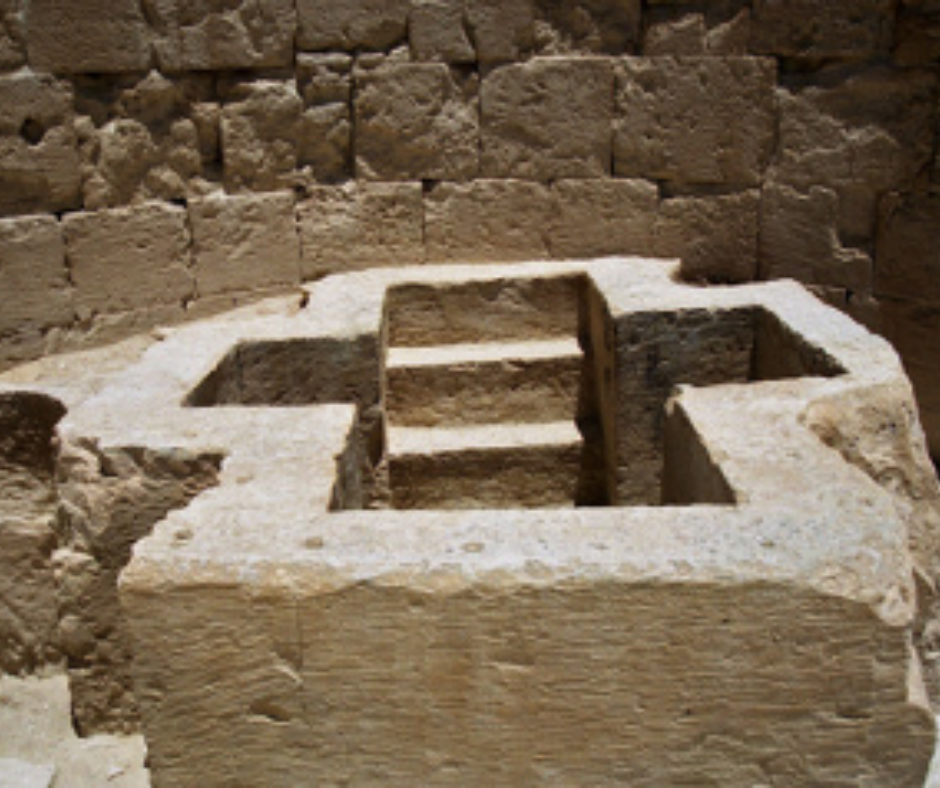
What are we called to embrace and take up? The cross of Jesus Christ which renounces the world and all of its superfluous distractions and arguments so what we can embrace and take up our cross and follow Jesus in embracing the least, the last, and the lost. I want to leave you with an image, and it is the image of an ancient Christian baptismal font. You may or may not know this, but many early Christian fonts were in the shape of a cross, or in some cases, the shape of a coffin. The shape represented that in baptism, a person dies to their old life of sin. That we die to our old arguments that have kept us from hearing Jesus and seeing our neighbors with greater clarity and love. We need to “drown” to the old ways of being and thinking and living so that we can rise to new life and new love.
So, I don’t know how you came to church today. I don’t know what you were talking about before you came or what you may decide to discuss with your family or friends over lunch or dinner this evening. But I do know one thing. Jesus steps into the middle of our daily conversations, and sometimes into the middle of our daily arguments over all kinds of things, and asks a simple but incredibly disarming and disorienting question: What have you been talking about as you journey through the day? How we answer that question today has everything to do with whether we are ready to embrace the way of Jesus or not.
[1] Mark 9:31
[2] Mark 9:37.
[3] Luke 22:17-20
[4] Bonhoeffer, Dietrich. The Cost of Discipleship. Translated by R.H. Fuller. New York: Touchstone, 1995, 89.

 gkevinbaker.com